Soi Cowboy: the 200-meter street that put Asok on the nightlife map
A cowboy hat gave the street its name. Neon made it famous. But to understand Soi Cowboy is to look past the glow — and see a small Bangkok lane become one of the city’s most recognizable images after dark.
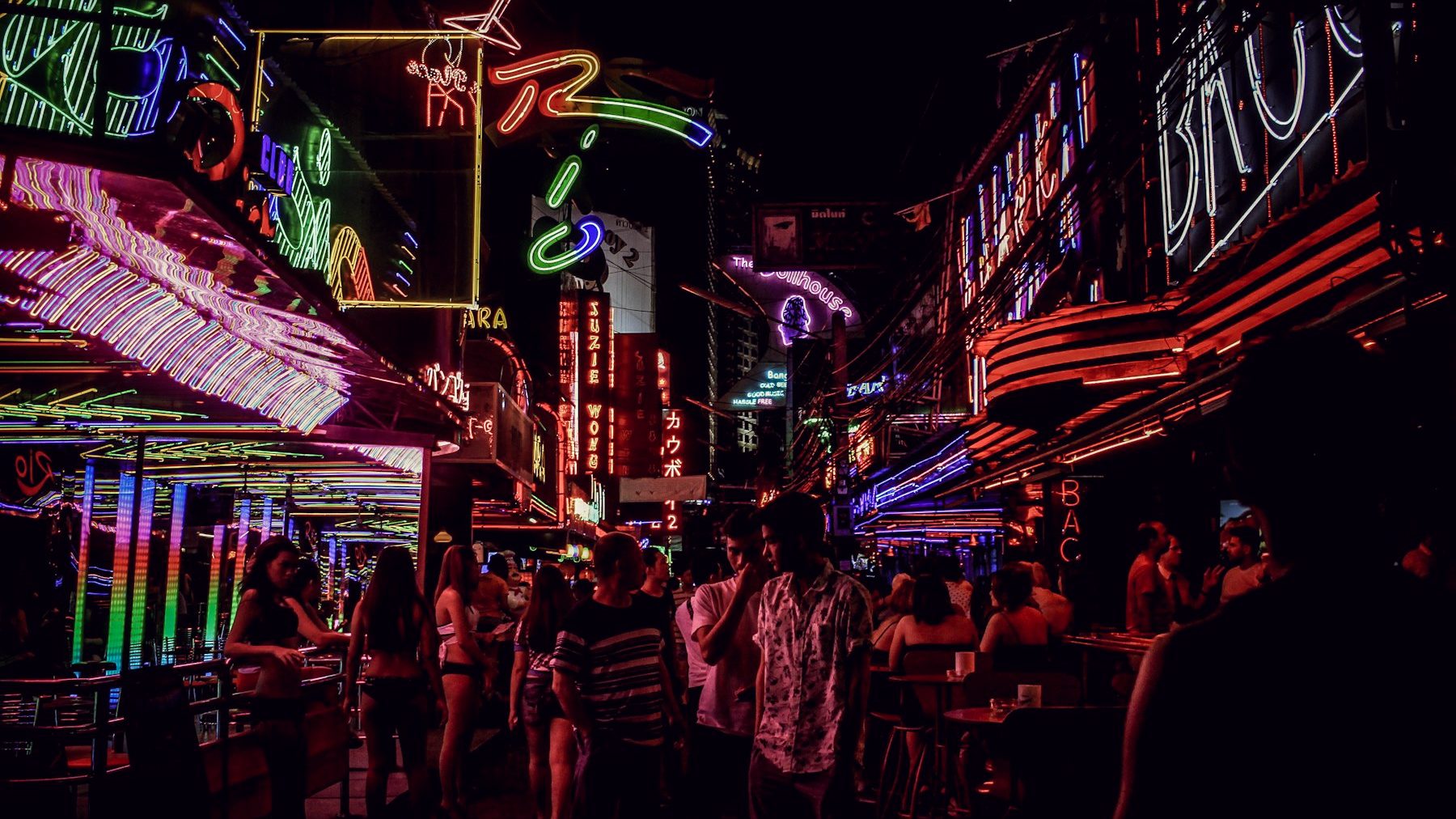
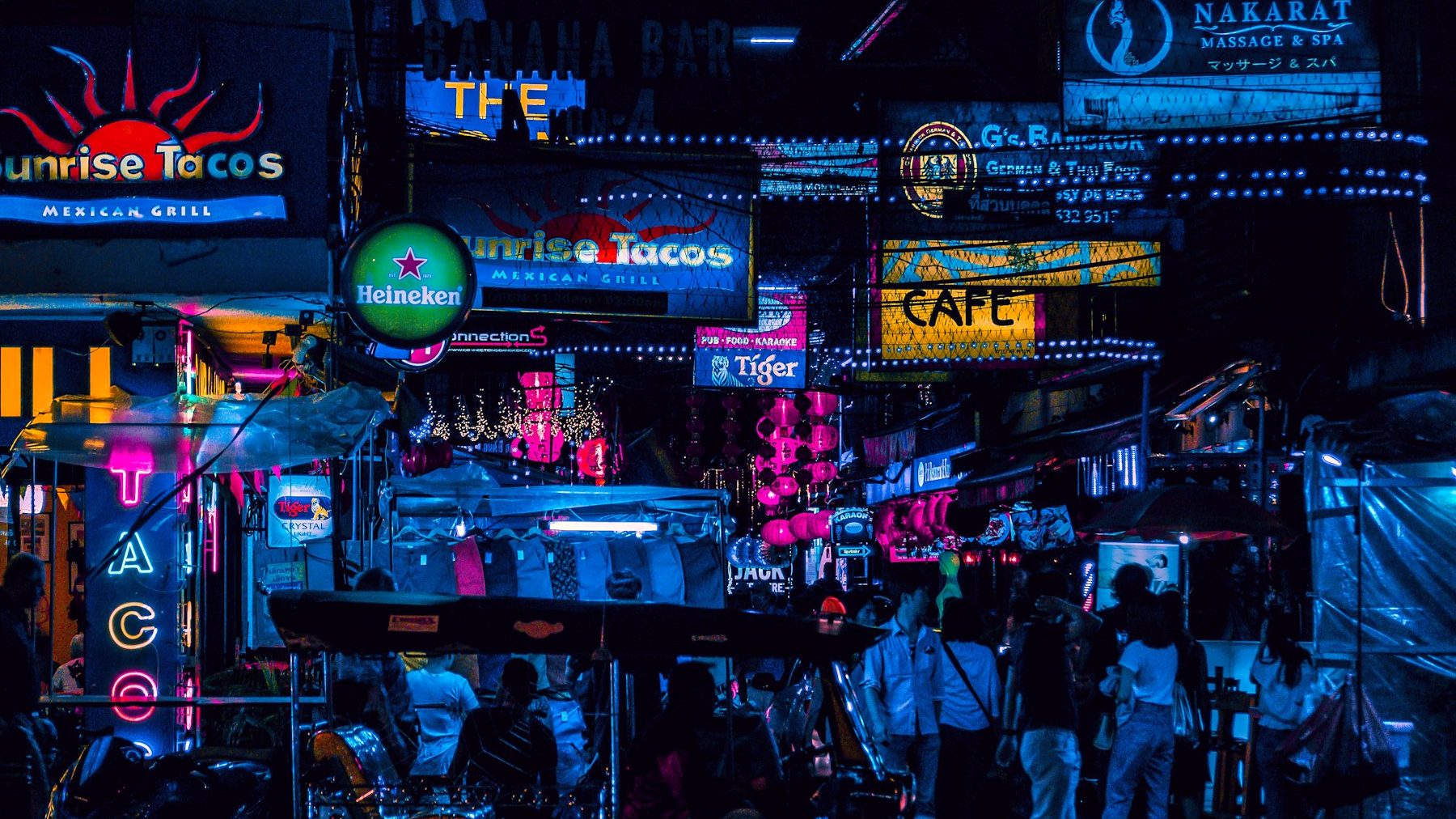
Two hundred meters of neon between Sukhumvit 21 and 23. · Photo: fridaae29 / Unsplash
Soi Cowboy is only around 200 meters long. It runs between Asok Montri Road — better known as Sukhumvit Soi 21 — and Sukhumvit Soi 23, a short walk from both Asok BTS and Sukhumvit MRT. It is not a grand boulevard, a historic market or an old riverside quarter. That is partly why its story is so revealing: Bangkok can turn even a back lane into a global symbol.
A street named for a man in a hat
The name begins with T. G. “Cowboy” Edwards, a retired US Air Force officer who opened a bar on the lane in 1977. Edwards was known for wearing a cowboy hat; the nickname followed him, then attached itself to the street. Before long, the lane was no longer simply an unnamed shortcut between two Sukhumvit sois. It had a character, a sign and a story people could repeat.
That detail matters. Bangkok’s sois are rarely just side streets. They are small cities with their own rhythms, shortcuts, regulars and reputations.
Soi Cowboy emerged as Bangkok was expanding east along Sukhumvit. What had once been a road leading out of the city was becoming a corridor of offices, apartments, hotels and international businesses. Asok sat in the middle of that change: close enough to the center to feel connected, but still full of lanes where a new kind of nightlife could take root. The result was not planned as a landmark. It grew into one.
A main road tells you where you are. A soi tells you what happens there.
More complicated than the postcard version
Soi Cowboy is often folded into a simple story about Bangkok nightlife and the Vietnam War era. The wider context is real: the city’s entertainment economy expanded rapidly through the 1960s and 1970s, shaped by migration, tourism, foreign business and the movement of people through the region.
But the street itself deserves a more precise telling. Soi Cowboy did not appear fully formed as a cinematic red-light district. Its identity accumulated over time: first through its bars and their customers, then through its name, then through the visual language of neon that made it unmistakable. That distinction keeps the city from becoming a cliché with a single explanation. Bangkok is not one story of war, tourism or nightlife — it is a place where all of those forces overlap with ordinary work, property, transport and the improvisation of small businesses.
Why this lane feels like a film set
The physical design of Soi Cowboy does much of the work. The lane is narrow enough that the signs on one side compete with the signs on the other. There is little distance between the viewer and the spectacle. You don’t see the street gradually from afar; you step into it.
This is what separates it from the wide, traffic-heavy Sukhumvit Road nearby. On Sukhumvit, Bangkok spreads out: towers, trains, hotels and pavements that change block by block. On Soi Cowboy, the city compresses into one frame — which is why it has traveled so well in photographs and films. The street has become visual shorthand for Bangkok after dark: saturated color, electric signage, noise, motion and the feeling that the night is already in progress.
Yet the image can be misleading. Behind the signs are workers finishing shifts, suppliers making deliveries, security staff, cleaners, vendors, drivers and residents of the surrounding streets. A famous nightlife lane is still part of a living neighborhood.
The adult economy behind the lights
There is no honest history of Soi Cowboy without acknowledging what it is known for: adult entertainment. That should be neither hidden behind euphemisms nor turned into a spectacle for visitors.
The street is a working environment shaped by choices, pressures and economic realities that cannot be understood from a quick photograph or a night spent passing through. The most respectful way to see it is with a little distance and curiosity: understand its place in Bangkok’s nightlife history, and remember that the people inside it are not part of the scenery.
That perspective makes the street more interesting, not less. It changes the question from “What happens here?” to “How did a place like this become so famous?” The answer leads back to Asok, to Sukhumvit’s transformation, and to Bangkok’s ability to create entire worlds inside a single soi.
A small street in a much bigger Bangkok
Today, Soi Cowboy sits beside one of the city’s busiest transport intersections. Asok BTS, Sukhumvit MRT, Terminal 21, office towers and hotel lobbies are all a few minutes’ walk away. The contrast is almost the point.
Walk out of the station and Bangkok feels sleek, vertical and relentlessly practical. Turn into Soi Cowboy after dark and the city becomes theatrical. Continue a few blocks and it changes again: quieter residential lanes, late-night restaurants, massage shops, cafés and the older rhythms of Sukhumvit Soi 23.
Soi Cowboy is not Bangkok in miniature. It is one of Bangkok’s many faces: a 200-meter reminder that the city’s most enduring stories are often written in its smallest streets.
FAQ
The street is named after T. G. “Cowboy” Edwards, a retired US Air Force officer who opened a bar there in 1977 and was known for his cowboy hat.