Pak Khlong Talat: Bangkok’s night shift in flowers
At midnight, Bangkok’s flower market isn’t winding down — it’s beginning. A walk through the city’s oldest wholesale market, where tomorrow’s temple offerings, wedding garlands and farewells are decided overnight.
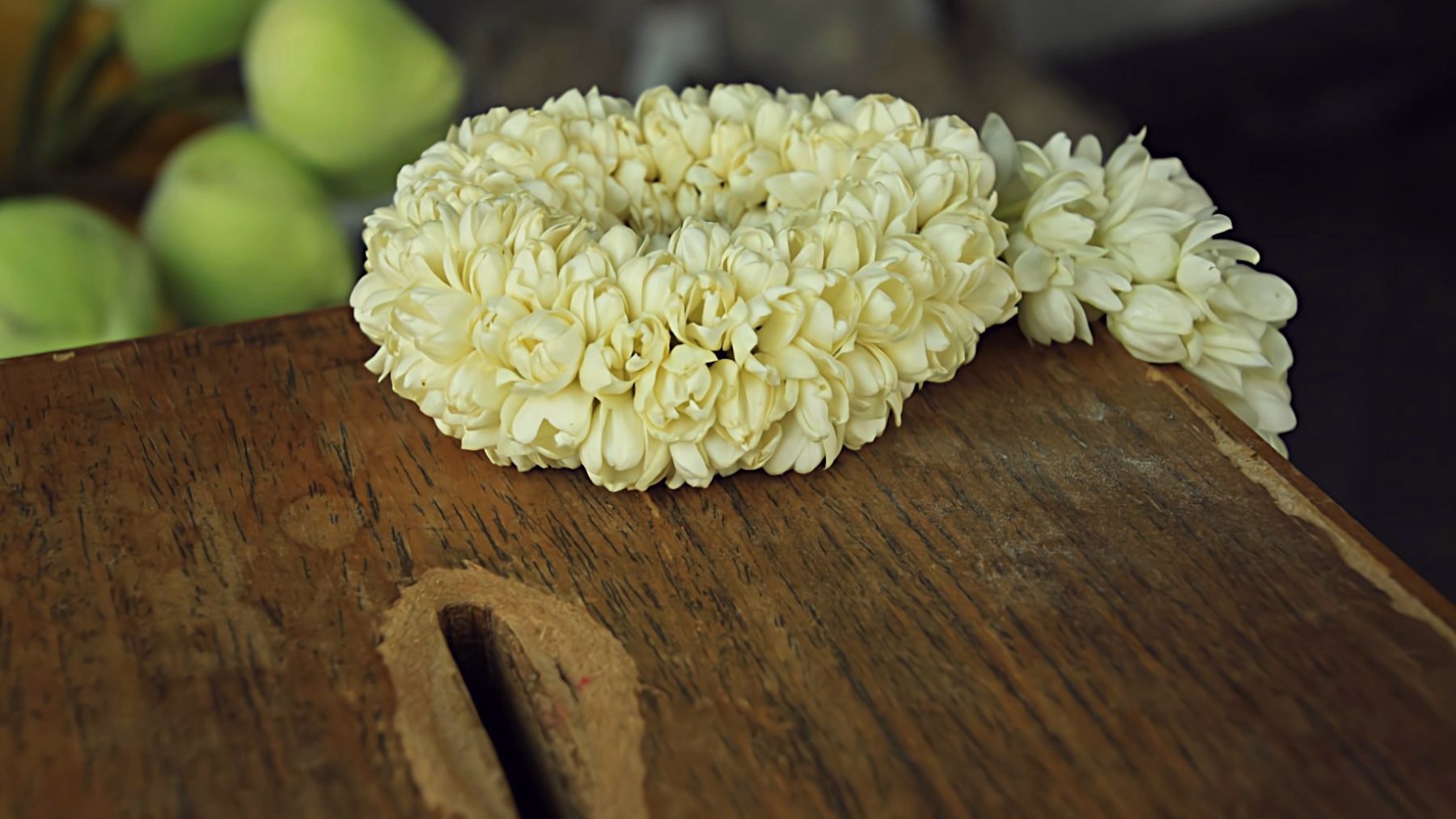
A jasmine garland, the market’s everyday language. · Photo: eli_ciuffarella / Unsplash
Buckets of orchids, marigolds, roses and jasmine arrive under fluorescent light. Porters move through narrow aisles with trolleys. Florists inspect stems with the focus of buyers at an auction. By the time much of Bangkok is asleep, Pak Khlong Talat is deciding how the city will look the next day: at temples, on spirit houses, in wedding halls, at graduations and in the hands of people making merit.
Not a night market in the usual sense — a workplace that happens to be beautiful.
Before flowers, there was water
Pak Khlong Talat sits near the Chao Phraya River on the edge of Rattanakosin, the old royal island. It is one of the city’s oldest markets and its largest wholesale flower market. The name means “market at the mouth of the canal,” and long before refrigerated trucks and night deliveries, that location made perfect sense.
Bangkok was built around water. Canals connected the capital to farms and orchards beyond the center; the river brought trade from much further away. Markets grew where boats could unload quickly, and Pak Khlong Talat was once known as a major fish market, with fresh catches arriving alongside fruit and vegetables from central Thailand.
Its later transformation into a flower hub followed the same logic. What had been a place for food moving into the city became a place for beauty, ceremony and ritual moving through it. Today most flowers arrive by road rather than boat, but the market still works on the rhythm of a water city: goods come in overnight, buyers arrive early, and by morning much of Bangkok has already been supplied.
Flowers are part of Bangkok’s everyday language
To see Pak Khlong Talat only as a colorful place to take photographs is to miss what the flowers are for. In Bangkok, flowers carry messages. Jasmine garlands are offered at shrines and temples as gestures of respect. Lotus buds appear in religious practice. Marigolds brighten spirit houses and ceremonies. Bouquets mark love, apologies, congratulations and grief.
The market supplies all of it. A florist buying in bulk may be preparing a hotel lobby display. A family may be choosing garlands for a household altar. A vendor may be gathering flowers for a temple offering before sunrise. Flowers are perishable, so decisions are made fast: what is bought tonight may sit in a shrine tomorrow morning, travel to a celebration that afternoon or mark a farewell by evening. It is a supply chain with a human pulse.
The city’s most fragrant night shift
The best time to understand Pak Khlong Talat is when it is busiest. Late at night and before dawn, the market becomes a choreography of unloading, sorting, pricing and carrying. The smell is not simply perfume: it is wet leaves, cut stems, cardboard, ice and thousands of flowers sharing the same humid air. Vendors work quickly because freshness is the whole economy.
Elsewhere, Bangkok’s night is sold through rooftop bars, neon, restaurants and music. Pak Khlong Talat has none of that theater. Its drama is more ordinary — people doing precise work while most of the city is off duty — and the result can be strangely moving. You see a capital preparing for the next morning before the next morning has arrived.
For travelers who enjoy Bangkok’s nightlife but want something beyond drinking or clubbing, this is one of the city’s most revealing stops. It has color, movement and energy, and it doesn’t exist for visitors. That is exactly what makes it memorable.
A market, not a backdrop
The most respectful way to visit is to remember that this is a working market first. Make room for trolleys. Don’t block an aisle for a photograph. Ask before taking close portraits of vendors. If you buy something, choose with purpose: a simple garland is a beautiful way to take part, especially once you know it may carry religious or personal meaning for the person who threaded it.
None of this makes the experience less spontaneous. It makes it more real. Bangkok’s most meaningful places rarely perform authenticity on demand; they are the places where daily life carries on whether visitors are there or not.
The river, the market and the city beyond it
The market sits close to the Memorial Bridge, old Rattanakosin and the ferry routes toward Thonburi. It can become part of an evening that moves through several Bangkoks: a riverside walk, a late dinner, a temple-lit street and, finally, the flower deliveries that begin after midnight.
This is where the idea of Bangkok’s many faces becomes useful. The same city that produces polished luxury malls also depends on this dense, practical, fragrant wholesale market. The same Bangkok that lights up at night for tourists is already awake for people who work with flowers. Pak Khlong Talat doesn’t just sell flowers. It reveals what Bangkok does with them.
FAQ
Pak Khlong Talat is Bangkok’s historic wholesale flower market near the Chao Phraya River. It also sells fruit and vegetables, but it is best known for flowers, garlands and temple offerings.