The Face of the River: Talat Noi, Bangkok’s time capsule
Two-hundred-year-old mansions, a Gothic church, alleys of secondhand engine parts and murals on every wall. The quietest corner of Chinatown is also its oldest.
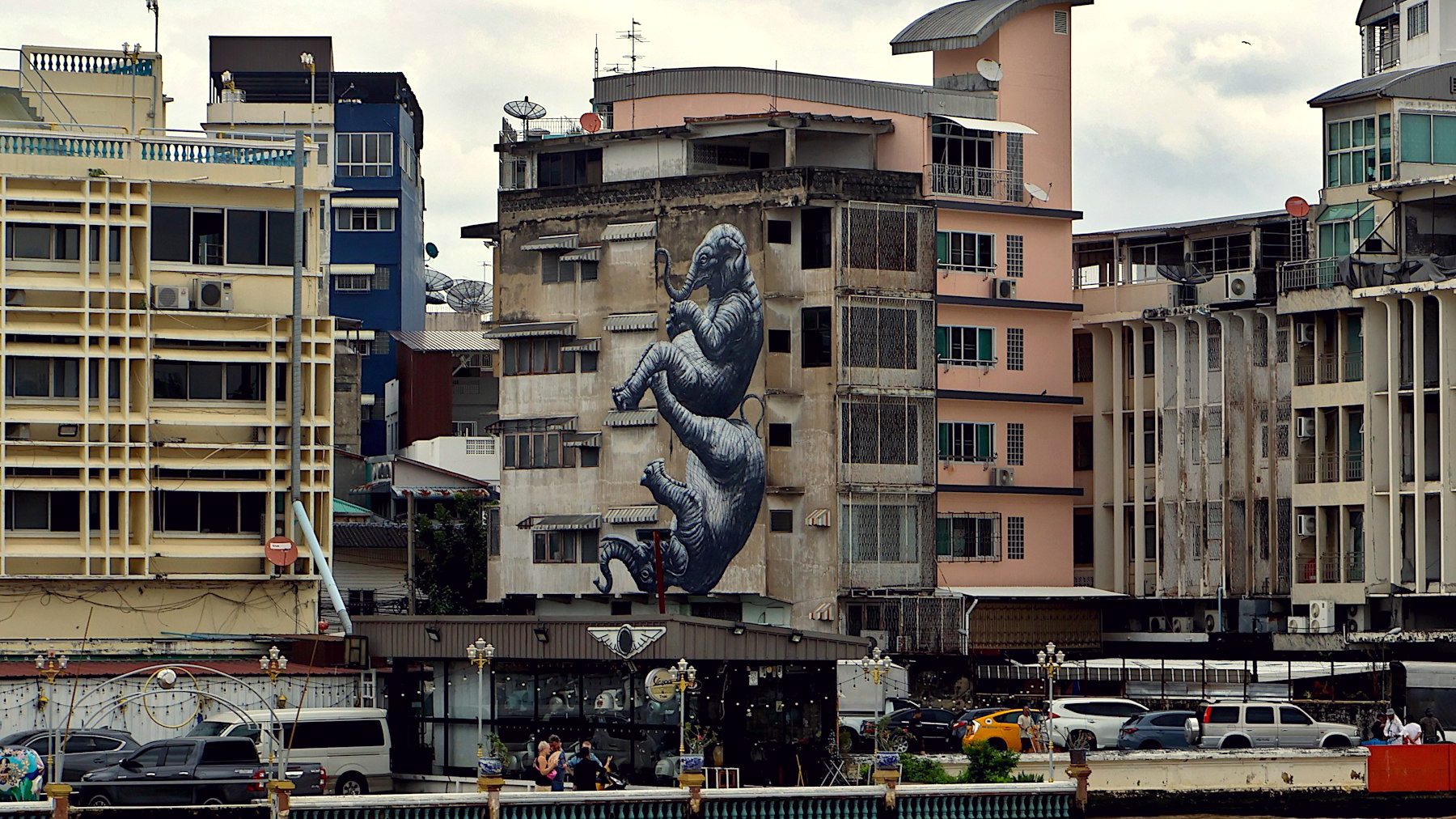
Talat Noi’s riverside walls, now a canvas. · Photo: feiffert / Unsplash
Talat Noi means “small market,” and the name undersells it. This riverside pocket at the southern edge of Chinatown is older than Bangkok itself, was once the city’s first port of entry for immigrants, and today looks like nowhere else in the capital: two-hundred-year-old Chinese mansions, a Gothic church, alleys stacked to the ceiling with secondhand engine parts, and murals on almost every free wall.
Older than the city around it
Long before Bangkok became the capital in 1782, traders were already working this bend of the Chao Phraya. Portuguese settlers built a church here in 1786. Chinese communities followed — Hokkien, Hakka and Teochew — along with Vietnamese and Khmer residents, each leaving their own temples and shrines. Ships docked here first, and new arrivals stepped off the boat into Talat Noi.
That layering is still visible on a short walk. A Catholic church, a Hokkien shrine and a Hakka shrine sit within a few minutes of each other, and the old riverside houses still face the water, because the river was the street when they were built.
The landmarks worth finding
Holy Rosary Church (Wat Kalawar). The Portuguese community’s church, rebuilt in the 1890s in Gothic style, with a tall spire and stained glass. It shares a gate with a school, so you walk in past children’s bicycles.
So Heng Tai Mansion. A roughly two-hundred-year-old Hokkien courtyard house: four wooden buildings around a central courtyard, which now holds a swimming pool used for scuba lessons, plus a small café. Only in Bangkok.
Chow Sue Kong Shrine. A Hokkien shrine from 1804 right on the river, with its own pier, from the days when temples faced the water because that was how people arrived.
The old Siam Commercial Bank. A 1908 Beaux-Arts building at the river’s edge, a reminder that this small market once handled serious money.
The river was the street when these houses were built.
Engine parts and street art
Then there is the part of Talat Noi no guidebook planned: the Sieng Kong area, where for around seventy years workshops have stripped, sorted and refurbished secondhand car parts. Gearboxes and engine blocks spill onto the pavement, welders work in open shopfronts, and a rusted vintage Fiat 500 has become the neighborhood’s unofficial mascot.
Around the mechanics, artists moved in. Murals — some by well-known Thai street artists such as Alex Face — cover shophouse walls, particularly along the lane leading to So Heng Tai. Some were part of a community effort to protect and brighten old walls. Add the cafés and small bars that have opened in restored shophouses, and you get one of the most photographed and least polished neighborhoods in Bangkok.
How to visit without breaking it
Talat Noi is a residential neighborhood first. People live behind those photogenic doors, and the mechanics are working, not posing. Keep your voice down in the alleys, step aside for scooters, buy a coffee or a snack if you linger, and ask before photographing anyone up close. The neighborhood has survived two centuries of change by staying a real place; it doesn’t need to become a backdrop.
FAQ
Talat Noi means “small market.” The riverside neighborhood at the southern edge of Chinatown predates Bangkok as the capital and was once the city’s first port of entry for immigrants.